Most of us know about International Women’s Day (which took place on March 8th), but did you know that it is also Women’s History Month? Although usually more noted in the USA, the month-long event commemorates and encourages the study, observance and celebration of the vital role of women throughout history.
This year’s theme is “Women Providing Healing, Promoting Hope”. Two women from history that fit into the role of healing are Florence Nightingale and Marie Curie.

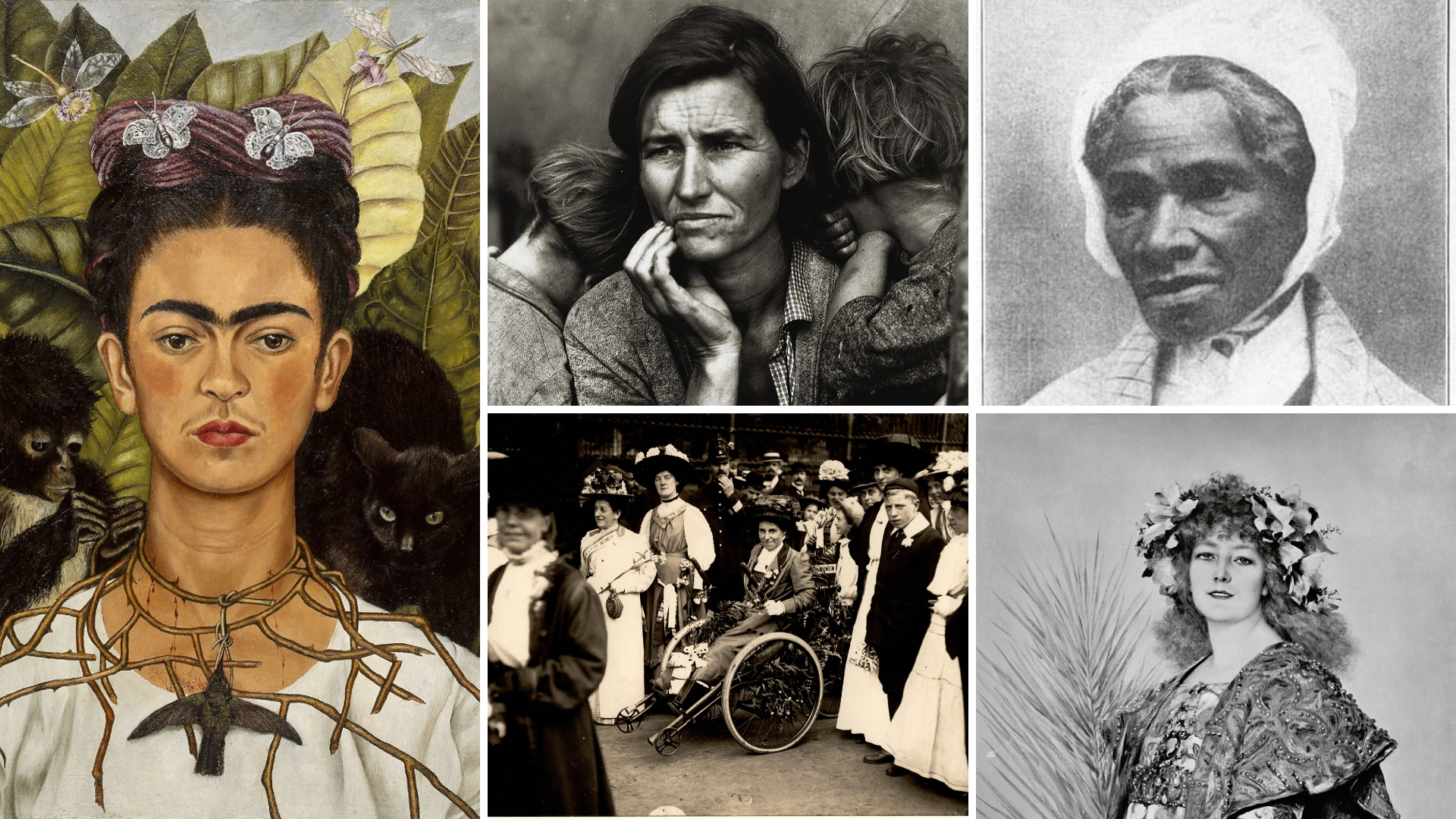
However, what is often overlooked in history are the stories of Disabled women. Women like Rosa May Billinghurst, Frida Kahlo, Sojourner Truth, Sarah Bernhardt and Dorothea Lange to name just a few. Whilst many of them were artists, actresses, activists and politicians, I wonder if any of them saw themselves as leaders?
As a Disabled woman, and as outlined in my masters dissertation on women with Disabilities, “we have an assemblage of identity categories, it is society that holds us back rather than ourselves. This is what is known as the Social Model of Disability – this argues that it is our culture that disadvantages us, not the impairments we have. Whether physical or invisible, mental or chronic, from birth or by accident, we are excluded from full participation within society by the dualism of our disabilities and our gender.”
We are accustomed to prejudice, being stigmatised and discriminated against. It is even more so when we have other marginalisations as well as being female and Disabled – BAME, lower socioeconomic class, sexuality, other gender categories, religion.
There is also prejudice in the Disabled community – those with mental and neurological impairments are not thought of so much as those with physical disabilities; but events such as Neurodiversity Celebration Week are helping to change that mindset. It is time to recognise the many strengths and talents that come from thinking and perceiving the world differently.
Seeing more Disabled and neurodiverse female leaders in the not too distant future is something we’re still quite a way off happening. There are programmes out there trying to change this and they appear to be great initiatives on a national scale.
On a more local level, there is BeOnBoard. During the whole of March, we are celebrating Women’s History Month with quotes from the female icons, Sheroes, heroines, trailblazers, change-makers & disruptors whose work + words inspire the next generation of female leaders. This includes Disabled women! Find out more by reading our International Women’s Day post.
We provide a platform for anyone of any gender and ability who wishes to develop their leadership skills to be a part of our programme. We also help organisations to diversify their boardrooms and governing bodies and I hope that this will include getting more Disabled women on boards and in leadership roles within the businesses in our region.
If you want to find out more about how we can help you develop your skills or bring more diversity into your organisation, get in touch with us. And if you want to discuss anything to do with Disability, women and business, you can get in touch with me at my professional work website: bethstephenson165.wixsite.com/ofbeth.
Beth Stephenson